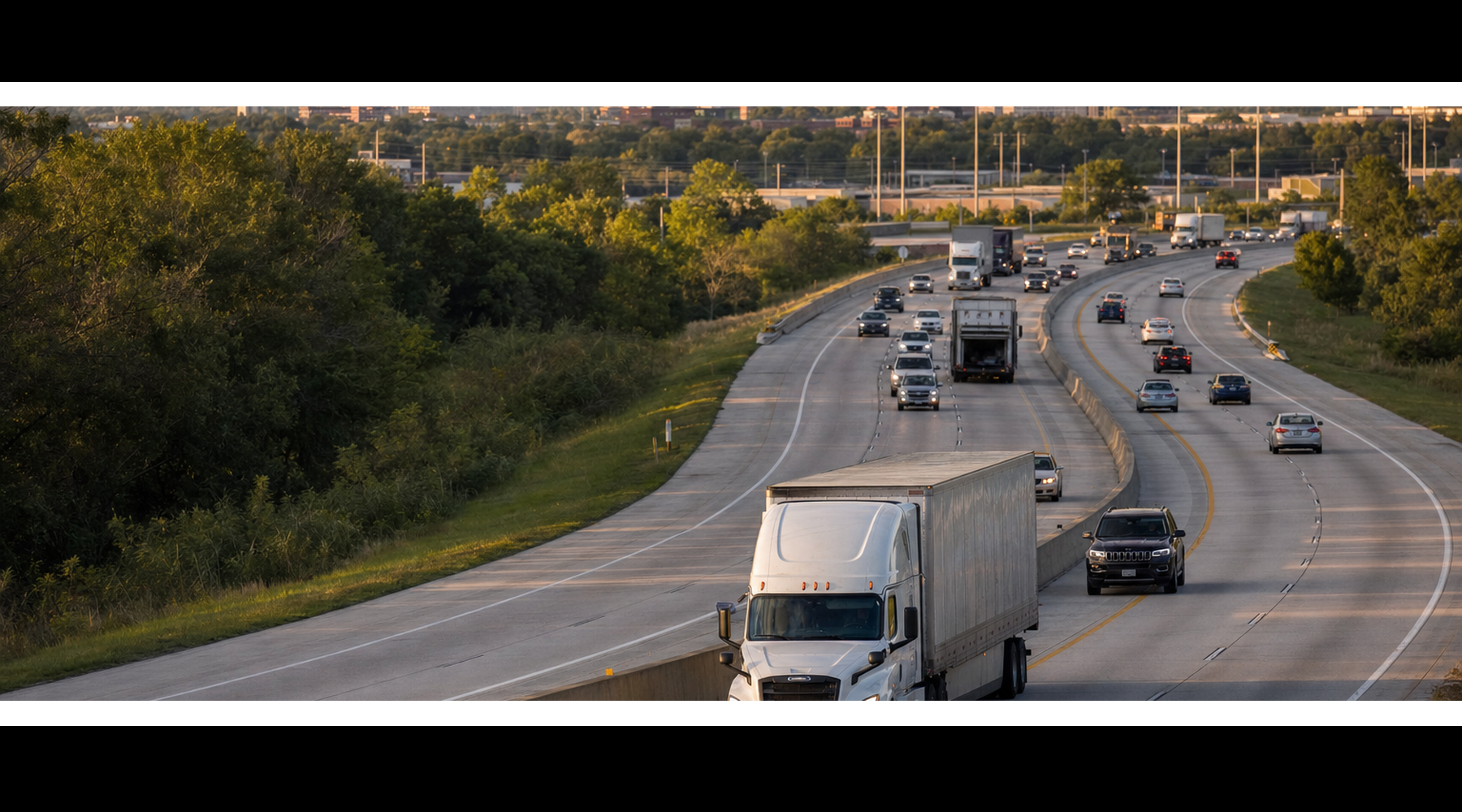
I-565 is one of Alabama’s shortest interstates, and one of its most dangerous for catastrophic crashes. This is not a coincidence. What makes I-565 so hazardous is not its length but what it is asked to do: carry enormous volumes of commuter and commercial traffic, navigate recurring work zones, and funnel three counties worth of drivers directly into Huntsville’s fastest-growing employment centers, all at highway speeds with very little margin for error.
If you or someone you love was seriously injured in a truck accident on I-565, here is what you need to know about how these cases work and why they are fundamentally different from ordinary car accident claims.

The I-565 Corridor: Small Road, Big Risk
I-565 stretches through Huntsville and Madison County, connecting the larger I-65 corridor to the heart of one of the fastest-growing metro areas in the country. Huntsville’s population growth has brought with it a significant increase in commercial traffic. The interstate funnels commuters from Madison, Limestone, and Morgan Counties into major employment hubs including Redstone Arsenal, Cummings Research Park, and downtown Huntsville.
The highway experiences recurring construction and lane modifications, with multiple ongoing work zones that create peak-hour congestion and dramatically increase the risk of rear-end collisions, sideswipes, and chain-reaction crashes. Speed variation, not just raw speed, is one of the primary crash causes on urban interstates like I-565: traffic can shift from highway speed to a complete stop in seconds, and the heaviest vehicles take the longest to stop.
Statewide data adds context. Alabama interstates make up only about 1% of the state’s total roadway mileage, yet they carry approximately 25% of all vehicle traffic and account for roughly 12.6% of all traffic fatalities. On a road like I-565, where commercial trucks, commuter vehicles, and construction zones mix daily, those numbers are not abstract.

Why Truck Accidents Are Legally Different from Car Accidents
If you were hit by an 18-wheeler or other large commercial truck on I-565, your case is fundamentally more complex than a standard two-car collision. Understanding why can mean the difference between a fair recovery and a settlement that leaves you struggling.
Federal Regulations Apply
Commercial trucks operating on Alabama interstates are subject to Federal Motor Carrier Safety Administration (FMCSA) regulations. These rules govern hours of service, maintenance schedules, load weight limits, cargo securement, and driver qualifications. Violations of these regulations can be critical evidence in a truck accident case, but accessing that evidence requires knowing what to look for and moving quickly before it disappears.
The Black Box
Most commercial trucks carry an electronic logging device (ELD) or event data recorder that captures speed, braking, location, and engine data in the moments before a crash. This information can prove that a driver was speeding, braked too late, or had been driving beyond legal hours-of-service limits. Trucking companies are not required to preserve this data indefinitely. It can be overwritten or lost within days unless a lawyer sends a legal preservation demand immediately after the crash.
Who Can Be Held Responsible: The Chain of Defendants
One of the most important differences in truck accident cases is the number of parties who may share liability. In a car accident, the other driver is usually the only defendant. In a truck accident, the list of potentially liable parties can be significantly longer.
- The truck driver may have been fatigued, distracted, impaired, or insufficiently trained.
- The trucking company may have pressured the driver to exceed hours-of-service limits, failed to maintain the vehicle, or hired a driver with a known history of violations.
- The cargo loading company may have improperly secured freight, creating a load shift that caused the crash.
- The truck manufacturer or parts supplier may have produced defective brakes, tires, or other components.
Each potential defendant carries its own insurance policy, often with significantly higher limits than personal auto policies. This is one reason truck accident cases frequently produce larger recoveries than car accident cases, but it also means you are likely facing multiple insurance companies and multiple defense teams, all working to minimize what they owe you.
The Catastrophic Injury Reality
Truck accidents on I-565 are not fender-benders. When a loaded commercial truck traveling at highway speed collides with a passenger vehicle, the physics are unforgiving. Spinal cord injuries, traumatic brain injuries, multiple fractures, and permanent disability are common outcomes. The gap in size and weight between an 18-wheeler and a passenger car means that the occupants of the smaller vehicle absorb an overwhelming share of the impact.
These injuries change lives. They may require years of rehabilitation, modify living situations, and end careers. A fair settlement in a catastrophic injury case has to account for future medical care, future lost wages, and the ongoing impact on your quality of life, not just what the bills looked like in the first 30 days.
What Insurers Will Try to Do
The trucking company’s insurance carrier will begin its own investigation almost immediately after a serious crash. Their adjusters are experienced, their lawyers are specialized, and their goal is to minimize the payout. One of the most reliable tools in their arsenal is Alabama’s contributory negligence law. If they can show you were even slightly at fault for the collision, they will argue you are entitled to nothing.
This is why it is critical that you do not give any recorded statements and do not discuss the accident in detail before speaking with an attorney. Our guide on what not to say to an insurance adjuster in Alabama is a good place to start, and the information applies with even more force when you are dealing with a commercial trucking insurer.
Understanding how Alabama’s contributory negligence law is used against truck accident victims is essential to protecting your case.
If the trucking company’s policy limits are insufficient to cover a catastrophic injury, uninsured/underinsured motorist coverage from your own policy may provide additional compensation.

You Need an Attorney Who Moves Quickly
Truck accident cases have a short window for evidence preservation. Black box data, maintenance records, driver qualification files, dispatch logs, and surveillance footage all need to be secured before they are lost. A legal preservation letter sent within days of the crash can protect evidence that the trucking company might otherwise destroy or lose.
At Chris Baldwin Law, we handle truck accident cases on a contingency fee basis. No fee unless we win. You do not pay anything to get started.
From one client: “Chris Baldwin and his team are top notch! The process we initiated was performed seamlessly and quickly.”
Read more client reviews at chrisbaldwinlaw.com/reviews.

Contact Chris Baldwin Law Today
If you were injured in a truck accident on I-565 in Huntsville or anywhere else in Madison County or Alabama, do not wait to get legal guidance. Call (334) 863-4555, available 24/7. You can also visit chrisbaldwinlaw.com to learn more.
Every day that passes is a day that critical evidence could be lost. Call today.
Frequently Asked Questions
How is a truck accident case different from a regular car accident claim in Alabama?
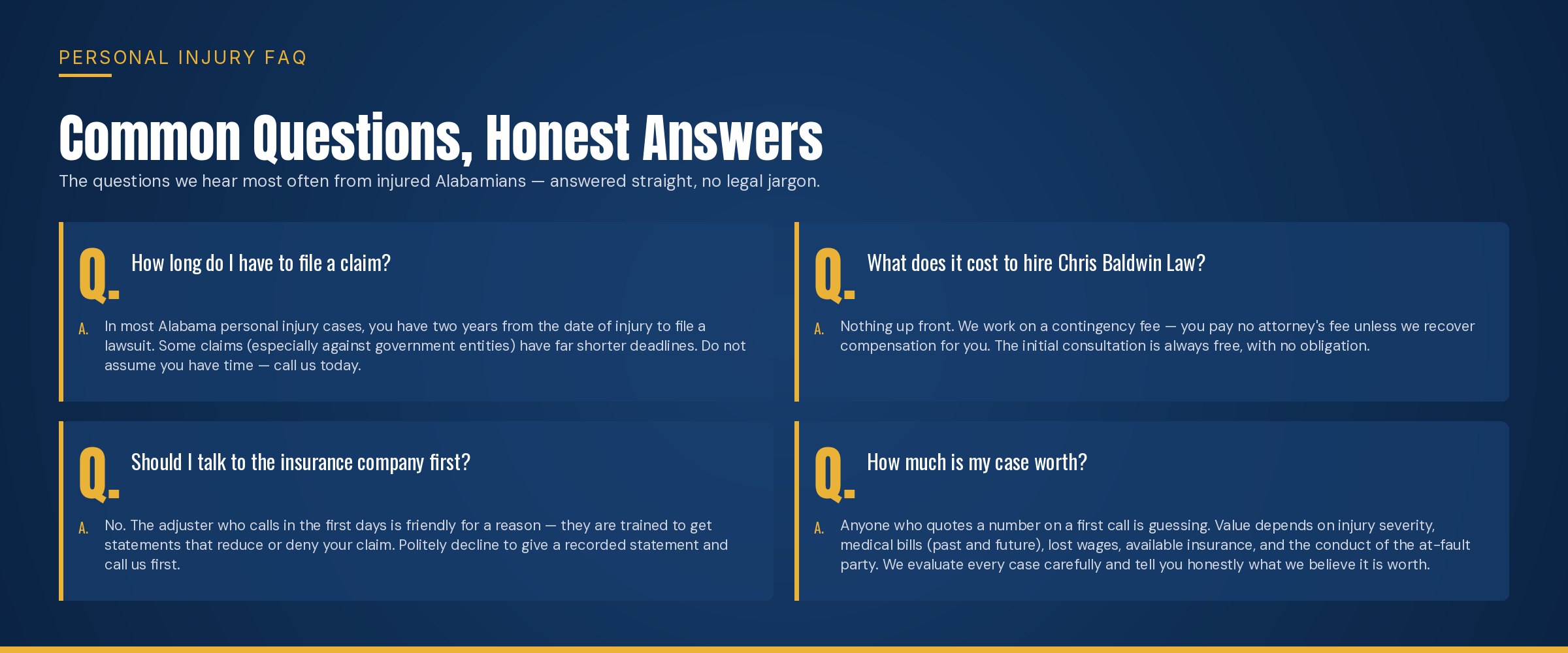
Truck accident cases involve federal regulations that do not apply to passenger vehicles, additional potential defendants (trucking companies, cargo loaders, manufacturers), electronic data that must be preserved quickly, and typically higher insurance policy limits. They are more complex and usually require more immediate legal action to preserve key evidence.
What if the trucking company says their driver was an independent contractor?
This is a common defense tactic. Trucking companies often claim their drivers are independent contractors to distance themselves from liability. However, under Alabama law and federal regulations, if the company controlled how and when the driver worked, they may still be held vicariously liable. An attorney can analyze the contractual relationship and determine who can be held responsible.
How long do I have to file a truck accident lawsuit in Alabama?
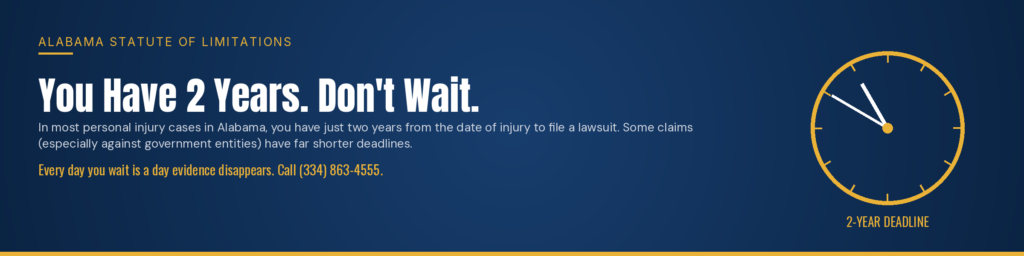
Generally, Alabama’s statute of limitations for personal injury claims is two years from the date of the accident. However, because evidence disappears quickly in truck accident cases, waiting anywhere near that deadline creates serious risks. Contact an attorney as soon as possible.
What if I was in the work zone on I-565 when the crash happened? Does that affect my claim?
Work zones add complexity but do not eliminate your right to recover. Reduced speed limits, shifting lanes, and construction equipment create conditions that drivers, including truck drivers, are legally required to navigate safely. If a truck driver failed to adjust for work zone conditions on I-565, that failure may be the basis of your claim.
Can I still recover if I was not wearing a seat belt when the truck hit me?
Alabama’s contributory negligence law means that any evidence of your own negligence can be used against you. Not wearing a seat belt could be raised as a contributing factor. However, this is a nuanced legal question, and the outcome depends on how your injuries relate to the seat belt issue. An attorney can assess how this factor affects your specific claim before you make any assumptions.