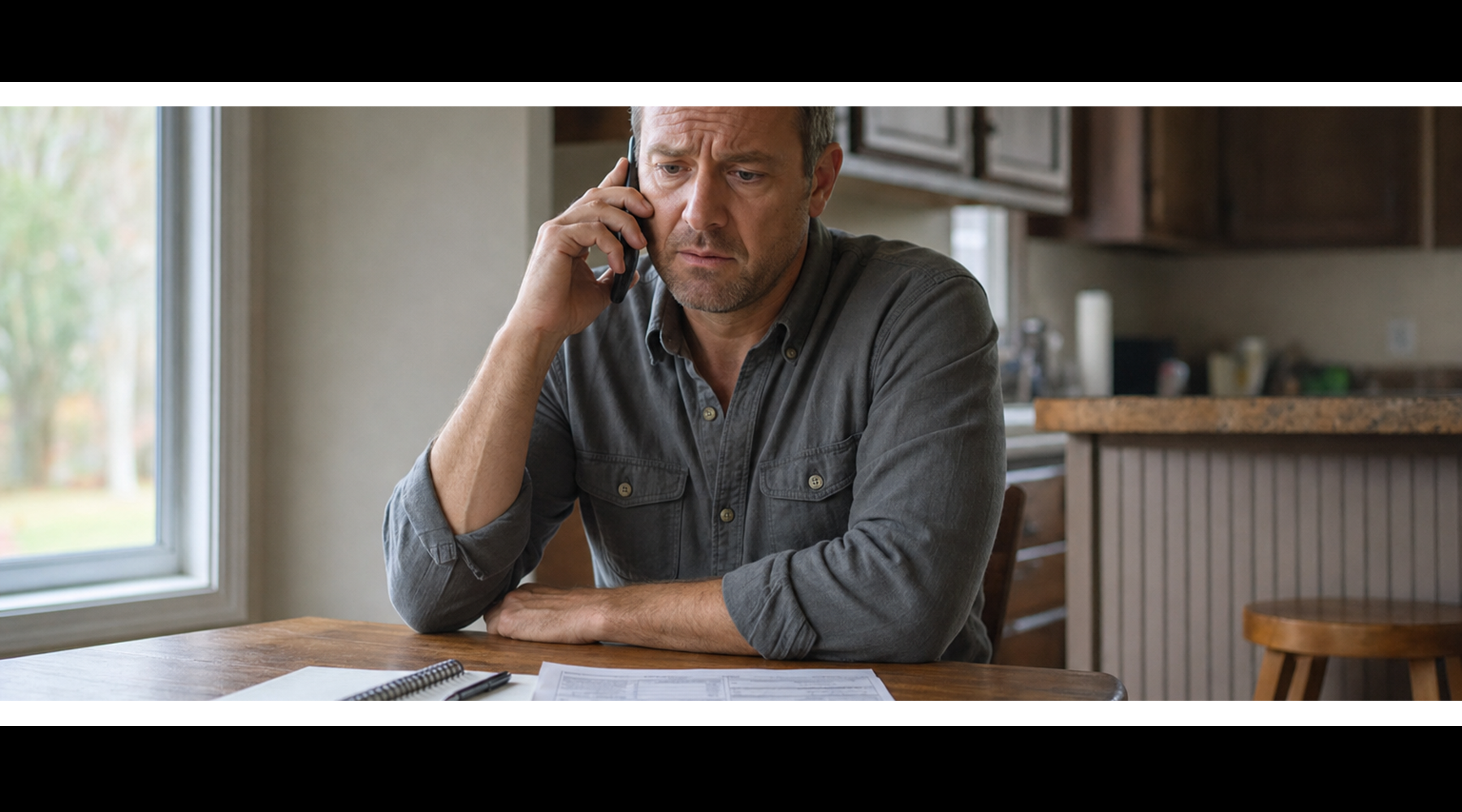
Alabama is one of only four states where a single “I’m sorry” can legally cost you everything. That is not an exaggeration. Under Alabama’s contributory negligence law, if an insurance adjuster can show you were even 1% at fault for the crash, you may be barred from recovering a single dollar. And adjusters know this. That call you are about to get from the other driver’s insurance company is not a routine check-in. It is an opportunity for a trained professional to gather information that could be used against you.
Here is what you need to know before you pick up the phone.
Why Alabama Is Different from Almost Every Other State
Most states use a “comparative fault” system, which means even if you were 30% responsible for a crash, you can still recover 70% of your damages. Alabama does not work that way.
Alabama follows pure contributory negligence. Under that rule, any fault on your part, no matter how small, can completely eliminate your right to compensation. If you are wondering how this plays out in real cases, our article on Alabama’s contributory negligence law explains the full picture.
The reason this matters so much when you are talking to an adjuster is simple: adjusters working in Alabama understand this rule better than you do. They are trained to listen for anything that could be tagged as partial fault. An offhand comment, a guess, a polite apology. These can be turned into evidence that you share the blame.
The Adjuster Is Not on Your Side
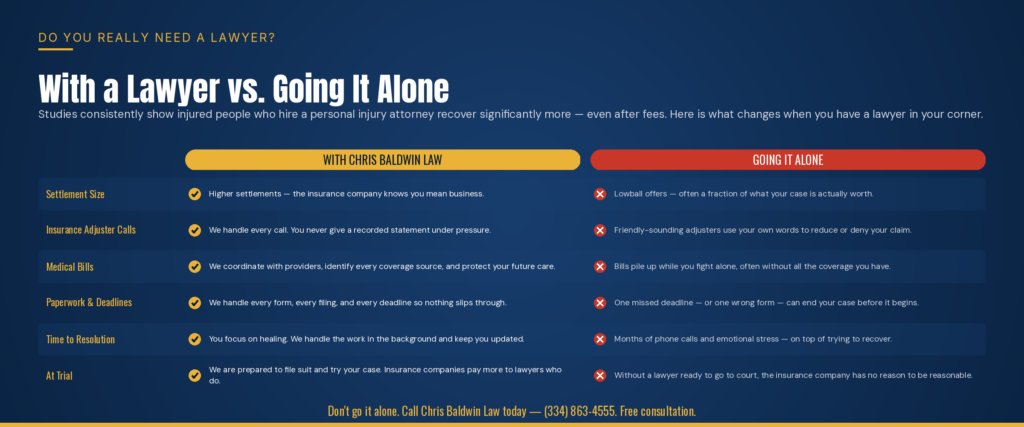
Insurance adjusters are not neutral parties. They work for the insurance company, and their job is to resolve your claim for as little money as possible. They are often friendly and professional, which makes it easy to forget what they are actually doing.
According to Alabama personal injury attorneys at Hodges Trial Lawyers, adjusters are trained to investigate liability, evaluate damages, and settle claims at the lowest reasonable amount. They may downplay your injuries, suggest the accident was minor, or build rapport before asking you questions they fully intend to use against you. Knowing this is not cynical. It is just accurate.

6 Things You Should Never Say to an Insurance Adjuster in Alabama
1. “I’m sorry” or “I apologize”
This is the big one. A genuine human instinct to apologize can be reframed by an adjuster as an admission of fault. You do not need to be confrontational. But you should not apologize for the accident, even if you feel bad about what happened.
What to say instead: Nothing. Politeness is fine. Apology is not.
2. “I didn’t see you” or “I didn’t notice the other car”
Statements about what you did or did not observe can be used to argue you were inattentive. Inattention is negligence. Negligence, even partial negligence, can be enough to bar your recovery entirely in Alabama.
What to say instead: “I have given my statement to the police. I prefer to let the investigation determine the facts.”
3. “I think I was going about…” or any speed estimate
Guessing your speed is almost always a bad idea. If you guess too high, you create evidence of speeding. If your guess is off in any direction, it can undermine your credibility. You genuinely do not need to estimate.
What to say instead: “I was traveling at a lawful speed. I will refer to the accident report for specifics.”
4. “It feels like just a sprain” or “I think I’m okay”
Injuries from car accidents often take hours or even days to fully appear. Adrenaline masks pain. Internal injuries have no immediate symptoms. If you minimize your injuries in an early conversation, that statement can be used later to dispute the seriousness of your medical treatment.
What to say instead: “I am currently being evaluated by a medical professional. I cannot speak to the extent of my injuries at this time.”
5. Anything about what the other driver did wrong
It may feel natural to explain exactly how the other driver ran a red light or crossed the center line. But making accusations or characterizations during an early adjuster call can backfire. Stick to your own observable facts, not your interpretation of what the other person did.
What to say instead: “I have provided my account to law enforcement. I will let the official record speak for itself.”
6. “Sure, I can give you a recorded statement”
As Martin & Helms note in their analysis of Alabama insurer tactics, adjusters will often tell you a recorded statement is just routine. It is not. You are generally not legally required to give the other party’s insurer a recorded statement. The recording is a tool for locking you into positions that can later be used to argue you bear partial fault.
What to say instead: “I am not comfortable providing a recorded statement at this time. I will be in touch through my attorney.”

Why Recorded Statements Are Especially Dangerous in Alabama
A recorded statement can be used in multiple ways you may not anticipate. The adjuster will ask open-ended questions. They may circle back to earlier answers to look for inconsistencies. They know that people in the days after a crash are often confused, in pain, and emotionally distressed, which makes those recordings prime material for building a fault narrative.
In Alabama, you are barred from seeking compensation if you are even 1% at fault. That is the legal context under which every word of your recorded statement will be analyzed.
Never agree to a recorded statement without first speaking to an attorney.
Watch Your Social Media
Do not post anything about the accident, your injuries, or your recovery on social media. Adjusters and defense lawyers routinely check public profiles. A photo of you at a cookout the weekend after a crash that you described as debilitating can destroy your credibility and your claim. Even posts that seem unrelated can be used to build a narrative about your physical condition.
Turn your profiles to private immediately and keep them that way throughout your case.
What You Are Actually Allowed to Say
You do not have to be rude to manage an adjuster call properly. Here is a practical script for the first contact:
“I was involved in an accident on [date] at [general location]. I am still in the process of getting medical treatment and evaluating my situation. I am not in a position to discuss the details of the accident at this time. Please direct further communication to my attorney. Thank you.”
If you have not yet hired an attorney, you can still say: “I am not prepared to discuss the details right now. I will follow up when I have had time to fully assess the situation.” That is enough to protect you in the short term.
“Do I Even Have a Case?” You May Not Know Yet
One of the most common reasons people say too much to adjusters is that they are not sure they have a strong case. They assume the insurance company will be reasonable. They think a quick conversation cannot hurt.
The truth is, you do not need to know whether you have a case before you protect yourself. That is exactly what a free consultation is for. At Chris Baldwin Law, there is no fee unless we win. There is nothing to lose by calling before you say anything that could cost you everything.
Here’s what one client had to say: “Chris Baldwin did an excellent job working our accident case. It was professional, honest, and hassle free. He did what he said.”
Read more client reviews at chrisbaldwinlaw.com/reviews.
Talk to Chris Baldwin Law Before You Talk to the Adjuster
If you have been in a car accident in Alabama and the other driver’s insurance company has already called, or is about to, please do not navigate that conversation alone. The stakes are genuinely higher here than in most other states.
Call Chris Baldwin Law at (334) 863-4555, available 24 hours a day, 7 days a week. You can also reach us at chrisbaldwinlaw.com. We will tell you exactly what to say, handle the adjuster communications for you, and make sure you do not unknowingly give up rights you cannot get back.
The call is free. The protection is real.
Frequently Asked Questions
Do I have to talk to the other driver’s insurance adjuster in Alabama?
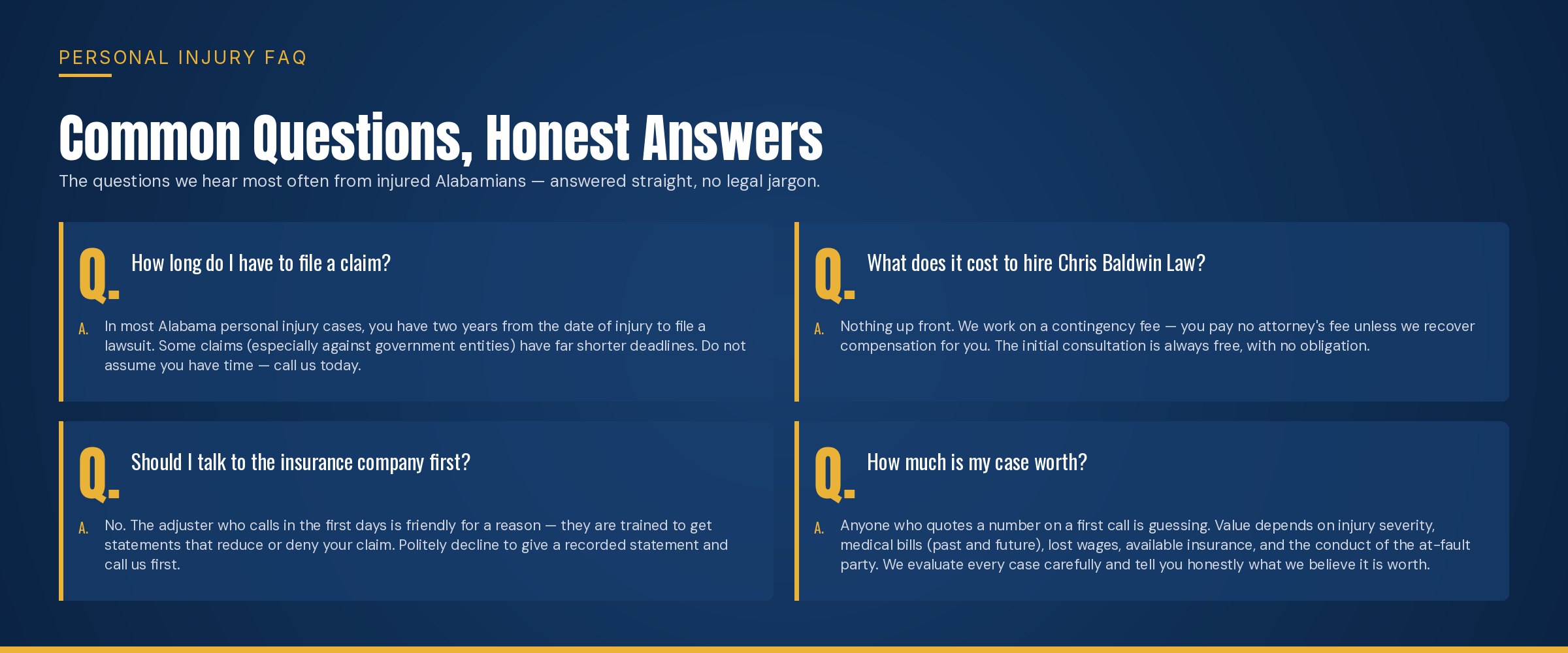
You are required to cooperate with your own insurer, but you have no legal obligation to give a statement to the other driver’s insurance company. You can and should decline until you have spoken with an attorney. Adjusters are trained to make this feel like a formality. It is not.
What if I already said something to the adjuster? Is my case ruined?
Not necessarily. What you said matters, but one statement is rarely the whole case. Contact an attorney right away. At Chris Baldwin Law, we can assess what was said, put it in context, and build the strongest possible claim from where things stand now. Do not wait.
Can the insurance company record my conversation without telling me?
Alabama is a one-party consent state for recording, which means the adjuster can legally record a call without disclosing it. Assume every call with an insurance company is being recorded, even if you have not been told so. Act accordingly.
What does contributory negligence actually mean for my case?
Alabama’s contributory negligence rule means that if the insurance company can show you were even partially at fault for the accident, they can argue you are entitled to nothing. This is one of the strictest fault standards in the country. Our article on Alabama’s contributory negligence law walks through how this rule works and what exceptions may apply to your situation.
What if I was also texting or distracted at the time of the crash?
This is exactly the kind of situation where you need an attorney before you say anything. The other driver may still bear the primary fault for the collision. But if you volunteer information about your own distraction during an adjuster call, you may hand them the argument they need to deny your claim entirely. Let a lawyer review the facts first.