You were hurt in an accident that was not your fault, or at least mostly not your fault. The other driver ran the light. The store left a puddle on the floor. The dog got loose. And now you are sitting at the kitchen table with medical bills, missed work, and an insurance adjuster who keeps asking strange questions about what you did right before it happened.
Here is what most people in Alabama do not know. Under Alabama’s contributory negligence rule, if the insurance company can pin even 1 percent of the blame on you, you can walk away with nothing. Not a reduced settlement. Nothing.
This is the harshest fault rule in the country, and only a handful of states still use it. Alabama is one of them. Understanding Alabama contributory negligence is the single most important thing you can do to protect your case.
What Alabama’s Contributory Negligence Rule Actually Says
Most states use something called comparative negligence. In those states, if you are 20 percent at fault and the other driver is 80 percent at fault, you still get 80 percent of your damages. It is fair and it makes sense.
Alabama is not most states. Here, the rule is called pure contributory negligence. If a jury or an adjuster decides you contributed to the accident in any way at all, even a sliver, you are barred from recovering anything.
That means medical bills, lost wages, pain and suffering, future treatment, all of it can disappear over something small. A glance at a phone. A late brake tap. A trip over your own foot on the way down. Insurance adjusters know this rule, and they use it every single day to deny claims in Alabama.
How Insurance Adjusters Use the 1 Percent Rule Against You
Adjusters in Alabama are trained to look for one thing first: any sliver of fault they can hang on you. They do it politely. They sound like they are on your side. They are not.
Here are some of the ways they try to build a contributory negligence defense:
- Recorded statements where they ask leading questions like ‘Could you have braked sooner?’ or ‘Did you see the spill at all?’
- Social media posts that show you doing anything physical after the accident
- Gaps in your medical treatment that they argue mean you were not really hurt
- Police reports where you said ‘I’m okay’ or ‘I’m sorry’ in the moment
- Anything in your past driving record or medical history they can twist into a comparison
One offhand comment can become the foundation of a denial letter weeks later. That is why what you say in the first 48 hours after an accident matters so much in Alabama.

Real Examples of How the 1 Percent Rule Plays Out
Consider a few scenarios that show how this rule actually works in Alabama claims:
Rear-end crash. A driver gets rear ended at a red light. Clear liability, right? Then the adjuster discovers her brake light was out. Suddenly the insurance company argues she was partially at fault for being harder to see. Under contributory negligence, that one tail light could end her claim.
Slip and fall. A shopper slips on a leaking freezer in a grocery store. The store had no warning sign. But the shopper was looking at her phone for a second. The store argues she was contributorily negligent for not watching where she walked.
Pedestrian accident. A man is hit in a crosswalk by a driver who ran a red light. The driver is clearly in the wrong. But the man stepped off the curb a half second before the walk signal turned. The insurance company uses that half second to deny the claim.
These are not exaggerated. They are exactly the kind of arguments Alabama personal injury lawyers see week after week.
The Exceptions That Can Save Your Claim
Alabama law does carve out a few important exceptions to contributory negligence. A good Alabama injury lawyer will look for these on day one.
Wantonness
If the at-fault party acted with wantonness, meaning a conscious disregard for known risks, contributory negligence is not a defense. Drunk driving, excessive speeding, road rage, and ignoring known hazards can all rise to wantonness.
Last Clear Chance
Even if you were partly at fault, you may still recover if the other party had the final, real opportunity to avoid the harm and did not take it. This doctrine shifts the focus to who could have prevented the injury in the last moment.
Children and Vulnerable Adults
Children under 7 cannot legally be contributorily negligent in Alabama. Children ages 7 to 14 are presumed not capable unless the defense proves otherwise. Adults with certain cognitive impairments may also be protected.
What Is at Stake If You Try to Handle This Alone
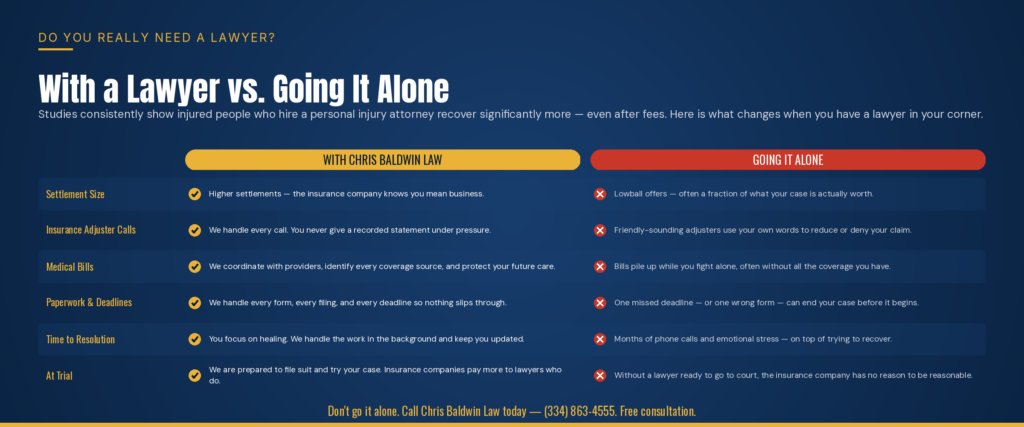
If you try to negotiate your own claim against an Alabama insurance adjuster, you are walking into a room where the other person knows the rules and you do not. They are not allowed to lie to you, but they are absolutely allowed to ask questions designed to get you to admit fault.
Here is what you stand to lose:
- Coverage of medical bills, including future treatment
- Lost wages, both past and future earning capacity
- Pain and suffering damages, which can be the largest part of a claim
- Property damage that was not fully covered
- Peace of mind, because an uncompensated injury follows you for years
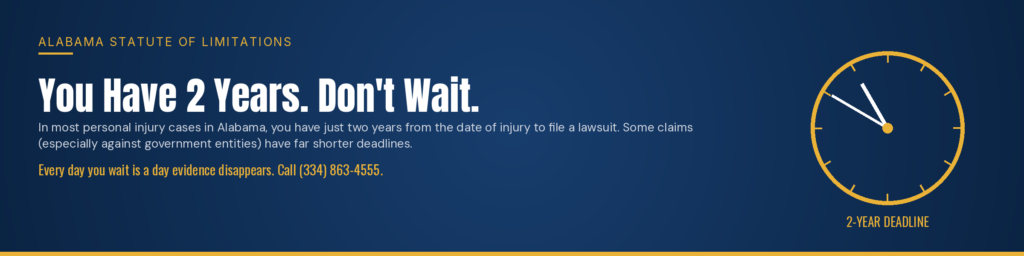
And once the statute of limitations runs out, usually two years from the date of injury in Alabama, there is no second chance.

How Chris Baldwin Law Fights Contributory Negligence
At Chris Baldwin Law, we know exactly how Alabama insurance companies build a contributory negligence defense, because we have watched them do it for years. When you call our office, here is what we start doing right away:
- Tell you what to say and what not to say to any adjuster who calls
- Send preservation letters so video footage, vehicle data, and scene evidence are protected before they disappear
- Pull police reports, 911 audio, and witness statements to lock down the facts while memories are fresh
- Build a timeline that closes off the angles adjusters use to argue you were partially at fault
- Identify whether wantonness, last clear chance, or another exception applies to your case
From one client:
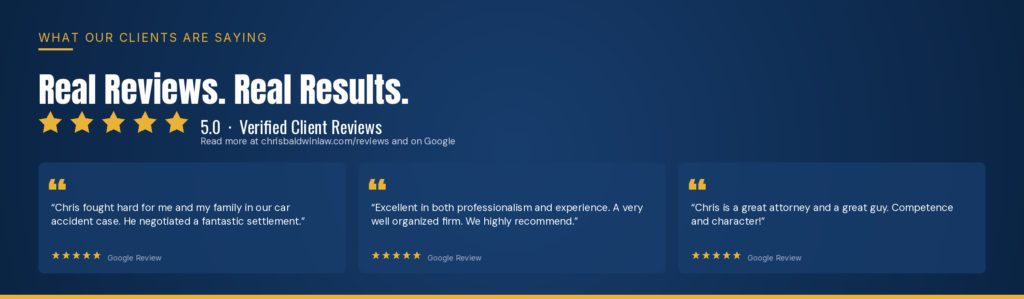
Chris fought hard for me and my family in our car accident case. He negotiated a fantastic settlement and we were pleased with the communication from his office.
Read more client reviews at chrisbaldwinlaw.com/reviews.
What Happens When You Call Our Office
A lot of people put off calling a lawyer because they are not sure if they have a case, or they think it is too early, or they worry about cost. Here is the truth on all three.
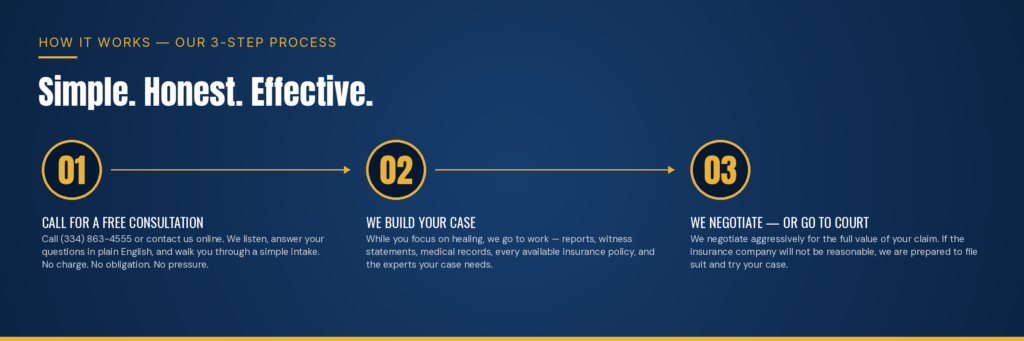
Not sure if you have a case? That is exactly what the free consultation is for. We will listen, ask a few questions, and tell you honestly what we think.
Worried it is too early? It is almost never too early. The first 48 hours are usually when the most important evidence either gets preserved or gets lost forever.
Worried about cost? Personal injury cases at Chris Baldwin Law are handled on a contingency basis, which means you owe us nothing unless we win your case. There is no fee for the call and no fee to get started.
Your Next Step
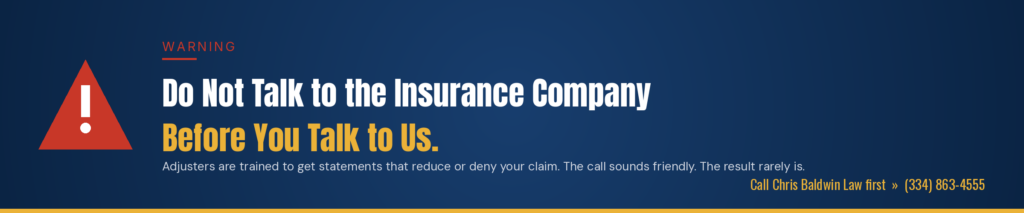
If you or a loved one were hurt in an accident anywhere in Alabama, do not give a recorded statement to an insurance adjuster until you have talked to a lawyer. One sentence taken out of context can cost you everything.
Call Chris Baldwin Law at (334) 863-4555 or reach out through our website at chrisbaldwinlaw.com. You do not have to figure out Alabama contributory negligence alone, and you should not try.
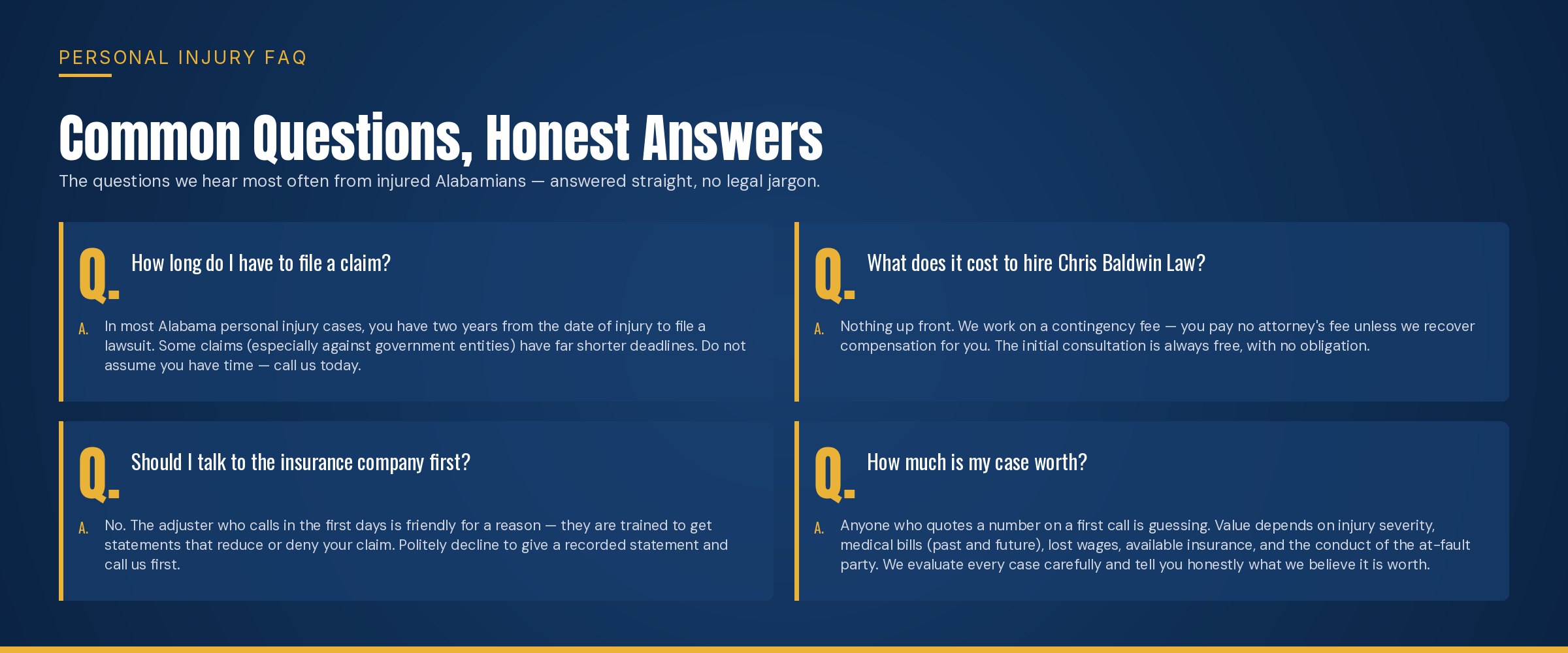
Frequently Asked Questions
Does Alabama really bar my claim if I am only 1 percent at fault?
Yes. Alabama is one of only a handful of states that still follows pure contributory negligence, which means any percentage of fault assigned to you, even 1 percent, can completely bar your recovery. That is why fault is the central battlefield in nearly every Alabama injury claim.
How long do I have to file a personal injury claim in Alabama?
In most Alabama personal injury cases the statute of limitations is two years from the date of the injury. Some cases, like medical malpractice and product liability, have different and sometimes shorter deadlines, so do not wait to find out.
What should I say to the insurance adjuster who keeps calling?
As little as possible. You are not required to give a recorded statement to the other driver’s insurance company, and doing so almost always hurts your case. Politely take their name and number and let your lawyer handle the call.
Can I still win if the police report says I was partly at fault?
Maybe. Police reports are evidence, not gospel. We have seen plenty of reports that get corrected after we dig into the actual facts, the witness statements, and any video. Do not assume a bad report is the end of your case.
How much does it cost to hire Chris Baldwin Law?
Nothing up front. We handle personal injury cases on a contingency fee, so you pay no attorney fees unless we recover money for you. The consultation is free and so is getting started.